We can surmise from an 1813 letter to her brother Francis that Jane Austen was bemused to find that their brother Henry had “heard P. & P. warmly praised in Scotland” (25 September). To her sister, Cassandra, she wrote:
Lady Robert [Kerr] is delighted with P. & P—and really was so as I understand before she knew who wrote it—for, of course, she knows now.—[Henry] told her with as much satisfaction as if it were my wish. (15–16 September)
Some weeks later she reported “more of such sweet flattery from Miss Sharp”: “I am read & admired in Ireland too.—There is a Mrs Fletcher, the wife of a Judge, an old Lady & very good & very clever, who is all curiosity to know about me” (3 November 1813). Such literary fame was heady stuff. Later in the same letter, she wrote exuberantly, “I do not despair of having my picture in the Exhibition at last—all white & red, with my Head on one Side;—or perhaps I may marry young Mr D’arblay.”
In 2025, celebrations for the 250th anniversary of Austen’s birth proved that her fanbase now reaches considerably farther than Scotland or Ireland. Against the backdrop of a United Kingdom rife with political tensions regarding migration, international relations, and overseas conflicts, coverage of the anniversary emphasized the increasingly global nature of Austen fandom. The Guardian foretold thousands of “superfans” flocking to Bath, while The New York Times rejoiced, “Everyone Is Invited to Jane Austen’s Birthday Party.” The 250th-anniversary celebrations around the globe proved that Austen’s novels continue to invite international readers to interact with her writing—and each other—within their own unique cultural contexts.
This special issue of Persuasions On-Line brings together essays from the “Global Jane Austen” conference held at the University of Southampton during that anniversary year, expertly organized by Gillian Dow and Katie Halsey. Janeites, Austenites, and those of us in between convened to discuss what may still be learned from and about Austen’s novels two and a half centuries after her birth. Enriched by the perspectives of delegates from eighteen countries (as far from Hampshire as India and Japan), the conference brought global perspectives to bear on everything from “Austen and Canada” and the “Ottoman World of Persuasion” to “Mr. Bingley and the Sugar Trade” and a workshop on Austenian video games.
One particularly vibrant strand of the program provoked stimulating conversations: twelve panels were themed around adaptation, tourism, translation, or fandom. These panelists considered how fans interact with Austen’s work across the globe and questioned what that engagement looks like in an increasingly globalized—and contradictory—world. Although technology and social media render us seemingly closer together than people of any previous generation, we are in many ways increasingly isolated and divided. What does this paradox mean for a global fan culture? The nine essays gathered here take up that question in three movements: through the physical spaces of heritage and literary tourism, through the transformative work of adaptation, and through the digital spaces where twenty-first-century fandom lives.
Our first three essays examine heritage sites and literary tourism, both real and fictional. Nicola Pritchard-Pink’s “The ‘Austen Effect’: Literary Tourism as Pilgrimage” opens the issue, presenting the results of a 2025 survey of fans who visited heritage sites and showing that visitors sought community and education rather than the immersion in Regency life often assumed of them. While Pritchard-Pink asks why fans travel to Austen’s places, Hannah Moss considers what they might find when they arrive, in “Location and Likeness: The Public Response to Martin Jennings’s Statue of Jane Austen at Winchester Cathedral.” Moss demonstrates how Austen statues—particularly Martin Jennings’s Winchester statue, unveiled for the 250th-anniversary celebrations—divide fans. Sarah C. Hurley’s essay, “Co-Authoring Austen: Guy Andrews’s Lost in Austen and the Janeite-Centric Narrative,” carries these questions about Austenian spaces from the real to the fictional and considers how the ITV adaptation represents fans’ reading practices when they encounter Austen’s settings and characters up close.
A focus on adaptation categorizes the next three essays. Katie MacLean’s “Queer Adaptation and Fan Culture: Kate Hamill’s Pride and Prejudice” argues that amateur and professional theatre encourage both new and seasoned Janeites to visualize Austen’s concern with gender and marriage through a queer lens. Turning to novel adaptations, Juliette Cousin analyzes how diasporic writers use Austen’s narrative structure to interrogate contemporary issues around race and migration, in “Austen Remapped: Diaspora, Race, and the Rewriting of Pride and Prejudice” in Uzma Jalaluddin’s Ayesha at Last and Sonali Dev’s Pride, Prejudice, and Other Flavors.” Linda Troost and Sayre Greenfield’s “Colorizing Austen” demonstrates how and why Austen uses color sparingly in her novels, before turning to colorful adaptations like Bride & Prejudice (2004), Clueless (1995), and Emma. (2020), which use color to modernize Austen for contemporary audiences.
The first of the final three essays, which investigate digital fan spaces, Camilla Wallin Lämsä’s “Miss Bingley’s Orange Gown: Sexualized Disgust and The Politics of Respectable Femininity in Pride and Prejudice Fanfiction” also considers color. Lämsä demonstrates how fanfiction can open space for collective disgust and hatred, thus exposing a darker element of Austen fandom that is rarely discussed. “Emma in China: Translation History and Fandom Culture,” by Qiangwi Gong and Liu Shuang, traces how Chinese translations of the novel and its adaptations influence Austen’s reception on Chinese social media platforms and shows how Austen’s concerns with marriage, class, and masculinity are understood by readers within contemporary Chinese contexts. Finally, Inger S. B. Brodey and Sarah Schaefer Walton’s “The Wide World of Jane Austen: Introducing Jane Austen’s Desk to a Global Fandom” discusses not only how the Desk website redresses the lingering notion that Austen was a geographically isolated author, but also how it makes archival materials that highlight her international connections accessible to global users—students, scholars, and fans alike.
In this special issue, we can open conversations begun in Southampton to everyone with access to the internet. We are grateful to Katie Halsey and Gillian Dow, who not only organized the conference but suggested the special issue, as well as to the contributors for their thought-provoking efforts. The members of the Editorial Board for Persuasions and Persuasions On-Line (listed at the bottom of the title page) read these essays with rigorous generosity. Brooke Neal, our Editorial Intern, worked on editing and formatting essays for this issue. Marsha Huff and A. Marie Sprayberry proofread them and contributed very helpful editorial suggestions. Carol Moss, our Production Editor, built the pages, wrangled images and clips, and caught errors. We appreciate all these people who created this special issue—all of us spread across the globe.
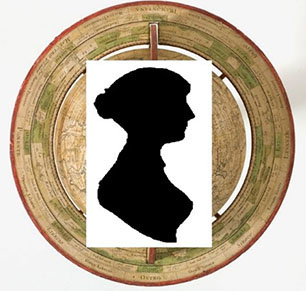 Austen’s global reach was wider than we might expect, even early on. In 1815, Isabelle de Montolieu published her translation—actually, more of an adaptation—of Sense and Sensibility: Raison et sensibilité, ou les deux manières d’aimer. And Jane Austen herself assured that Emma was read even farther from England, sending a copy to her brother Charles, who—after the wreck of his frigate HMS Phoenix—“read it three times in the Passage” home. While in mid-April 1816 he was on the Zodiac transport, sailing through the Cyclades and along the Barbary Coast of Africa, he recorded being “Much amused” by his first reading of Emma, a work that so many have read as Austen’s celebration of Englishness. Two weeks later (May 2), after he was acquitted at his court-martial for the loss of the Phoenix and on his way across the Mediterranean, he “after dinner read Janes Emma over again.” On his way up the Atlantic coast of Portugal and Spain, he read the novel once more, alternating it with Hume’s History of England. He seems to have begun it on June 1; on June 10, he recorded: “After dinner finished the 3 Volume of Emma being the third time of reading it.”
In December 1816, one year after Murray’s edition came out, Emma was published in the United States (without the author’s knowledge) by Matthew Carey of Philadelphia. Jane Austen’s global fandom was truly spreading. These essays show some of the ways that fan culture has developed—and taken forms that surely no one would have foretold in 1816. Austen’s playful prediction that her portrait would appear in the Exhibition might have a natural sequel in today’s Jane Austen sculpture, but surely she would never have thought, “I am read & admired in Chinese too.” What expansions might the next two centuries bring?
