Austen’s fandom enjoys a niche status in modern cultural hierarchy, mingling highbrow literature with popular culture. Media stereotypes of the contemporary Austen fan range from the Colin Firth-obsessed Regency ball attendee to the serious “Austenite” scholar. Many of these fans, unhindered by copyright, produce dozens of amateur and professional Austen adaptations, spin-offs, and retellings a year. But while scholars often focus on novels and films that reimagine or complicate the lives of Austen’s fictional characters, or even Austen herself, fewer have examined those featuring a Janeite protagonist: a heroine whose narrative development is dependent upon some revelation related to Austen’s life or fictional works.1 Surprisingly, despite the Janeite protagonist’s love and respect for Austen as a “divine” literary and historical figure, the Janeite-centric narrative often challenges Austen’s authority as fictional creator, disputing traditional ideas about singular, divine authorship. Many have examined Guy Andrews’s 2008 ITV miniseries Lost in Austen as a case study in adaptation and fandom but not in the context of the Janeite-centric narrative. This paper examines Lost in Austen’s Janeite protagonist as a fictional allegory for the ways in which real-life Janeites revise Austen’s work, suggesting that authorship is an inherently collaborative, intertextual, and ongoing relationship between a text’s author and its fanbase.
Sarah Glosson’s Performing Jane describes the typical Janeite as “a white, educated, affluent woman” who self-identifies as an ardent admirer of Austen and her fiction (3). A 2008 survey of international Janeites supports this general understanding of the Janeite: of 4,501 total participants, 96% identified as female, 90% lived in English-speaking nations, 81% possessed a bachelor’s degree or higher, and 75% reported current or previous careers (Kiefer). Austen-fan activities may include but are not limited to scrapbooking, cosplay, pilgrimage, and attending Regency conventions, all as a means of seeking “more of the story even when there is no more official story out there” (Luetkenhaus and Weinstein 19). Often this desire for “more Austen” manifests itself in the production of imitative literatures, including both fanfiction and traditionally published material, which attempt to alter or expand Austen’s texts.
Janeite-centric narratives, such as Andrews’s Lost in Austen, are adaptative works that feature a Janeite heroine whose defining trait is her obsession with all things Austen, usually to the detriment of her romantic prospects, social life, or career. While some other popular authors and storyworlds do enjoy similar treatments in fan-authored works, this phenomenon of Austen’s popular reception—professionally produced adaptations in which the protagonist is a superfan of the adapted text—is something no other author seems to have inspired on such a widespread scale.2 Beginning with Rudyard Kipling’s 1924 short story “The Janeites,” which follows a secret society of World War I soldiers devoted to Austen’s work, the tradition of Janeite-centric fiction extends to popular contemporary titles such as Shannon Hale’s Austenland (2008), Karen Joy Fowler’s The Jane Austen Book Club (2004), and several installments in Hallmark Channel’s 2024 “Loveuary and Jane Austen” made-for-television film series.
In the vein of transformational fanfiction, which aims to “right a wrong in the story in the eyes of the fans” (Luetkenhaus and Weinstein 50), the Janeite-centric narrative employs tropes and plot devices that simultaneously affirm and transform traditional Austenian stereotypes. Janeite protagonists offer a vehicle through which the authors of Janeite-centric texts may freely explore, find fault with, and sometimes fully reject Austen’s narratives. Andrea Coldwell notes that Janeite heroines, such as those found in Polly Shulman’s Enthusiasm (2006) and Heather Vogel Frederick’s Pies and Prejudice (2010), are often bookish and “confident in their own values and abilities” yet “timid in social situations” with a “careful and simultaneously organized” view of romance. They revere Austen’s novels as whimsical, elegant vehicles of escape from their lives, but neither Shulman’s nor Frederick’s heroine “attempts to be an Austen character. They admire without emulating” (Coldwell). Lost in Austen provides a notable exception to this rule, as “real-world” twenty-first-century Janeite Amanda Price magically switches places with the character of Elizabeth Bennet in the fictional world of Austen’s Pride and Prejudice.
© 2008 ITV/Grenada Television Ltd.
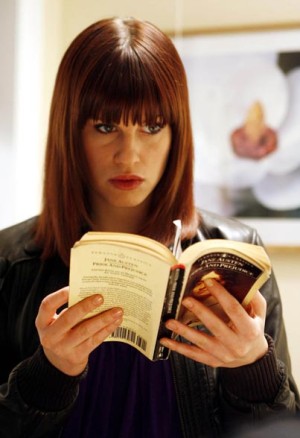
Like many real-world Austen fans, Amanda repeatedly returns to Austen’s work—particularly Pride and Prejudice—in search of comfort, catharsis, and escape. Laurie Kaplan describes Amanda as “a typical English ‘singleton’” and “contemporary Generation-Y ‘Everygirl’” with thoroughly modern baggage: a boozy, inattentive boyfriend and monotonous day-job that leave her longing for the romance and gentle manners of Austenian society (“Lost in Austen”). “It’s the same for everybody,” Amanda says, “and I . . . do what we all do. I take it on the chin and patch myself up with Jane Austen” (Ep. 1 1:43). In a voiceover comprising the series’ opening line, Amanda establishes Austen’s deep significance as a literary touchstone in her life: “It is a truth generally acknowledged that we are all trying to escape. I escape always to my favorite book, Pride and Prejudice. I’ve read it so many times now, the words just say themselves in my head and it’s like a window opening; it’s like I’m actually there” (Ep. 1 0:06). Amanda’s experience of the text is inherently immersive; Amanda feels as if she is not merely reading a novel but physically entering the fictional world of Austen’s design: “It has become a place I know so intimately. I can see that world—I can touch it. I can see Darcy.” During these words, the slow-motion, daydream-like image of her running to Mr. Darcy, who cuts a hazy yet unmistakable figure on Pemberley’s estate, flashes across the screen (Ep. 1 0:33). Although she does not write her Darcy-fueled fantasies on paper, Amanda’s daydreams closely parallel self-insert Austen fanfiction, placing the fan-author at the narrative’s center in the role of heroine—a literal “escape” into another world. Janeite heroines such as Amanda mirror the real-world Janeite’s immersive fan activities, including fanfiction, cosplay, participating in Regency-themed events, and literary tourism.
Nicola Pritchard-Pink’s study on literary tourism uses a self-report model to identify reasons for literary tourism to Austen-related locations and landmarks. Among the reasons readers identify for seeking pilgrimage include “the desire to increase their knowledge and learn something new about Austen and her world” and “a wider interest in heritage and cultural tourism,” with some respondents explicitly denying that their travels have had anything to do with “seeking immersion” in Austen’s texts or Regency life. Regardless of the driving intention, however, the action of physically returning to locations so steeped in both the history and visual allure of Austen’s world and texts (or, at least, film and television adaptations of those texts) is inherently immersive on some level. Glosson defines a pilgrimage as “a quest to seek something outside the familiar, habitual modes of everyday life, by temporarily moving—literally and figuratively—away from the everyday reality and into an alternative form of reality” (165). Other immersive fan activities, whatever the fans’ driving motivation in seeking them out, provide similar means of cultivating these alternative realities.
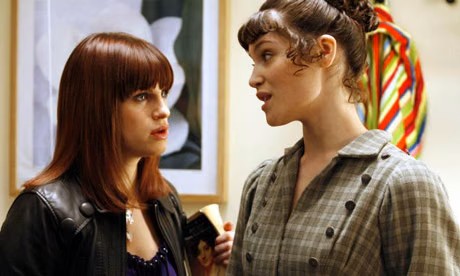
As Lost in Austen’s Janeite protagonist experiences an interactive encounter with the text of Pride and Prejudice, she—inadvertently at first, although later with conscious intention—becomes an active co-author and adaptor, shaping the storyworld as she experiences it firsthand. The metaphorical window opening of Amanda’s reading experience becomes literal following her rejection of a drunken marriage proposal from her boyfriend, when the living, breathing, flesh-and-bone Elizabeth Bennet stumbles into Amanda’s apartment bathroom through a magical doorway evocative of Narnia’s wardrobe or Wonderland’s rabbit hole. Elizabeth explains that on the other side of Amanda’s bathroom is a door into Longbourn’s attic that no one has ever been able to open until today: “You, [Amanda], have opened this door for me,” Elizabeth declares. “You are the key!” (Ep. 1 4:36). Elizabeth’s insistence that Amanda is somehow responsible for the bridge between their two worlds suggests that readership is integral in bringing Austen’s world to life, as Amanda’s engagement with and devotion to the text allow Austen’s characters to enter the real world and vice versa. As Elizabeth ventures forth into modern London, Amanda takes her place within the world of Pride and Prejudice, stepping through the doorway to arrive at Longbourn. On the other side of this magical door, a common device used to suspend disbelief in myth and literature, “an adventurer could find Romance . . . or alternatively, Disaster” (Kaplan, “‘Completely Without Sense’” 241). Through Lost in Austen’s doorway, Amanda finds both: when Elizabeth refuses to return to Longbourn, Amanda remains within the world of Pride and Prejudice in her place as an unauthorized character, instigating damage control as Elizabeth’s disappearance and her own anachronistic presence disrupt the novel’s plot.
© 2008 ITV/Grenada Television Ltd.
Critics such as Cheryl Wilson have suggested that readers gravitate to Austenian spin-offs and adaptations because they look to Austen’s novels as a source of advice or self-help for dating and family life (89–90), but Janeite heroines, including Lost in Austen’s Amanda, more often grow to challenge rather than confirm Austen’s textual authority. As Amanda traverses the fictional landscape of Pride and Prejudice attempting to preserve Austen’s narrative, she inadvertently begins to transform it. The cleavage-revealing, hip-hugging outfit in which she arrives at Longbourn immediately draws the attention of Mr. Bingley, and Amanda’s first narrative upset occurs when she gets drunk at the Meryton assembly and kisses him on the lips—scandalously, with tongue. Mr. Bingley begins to pursue Amanda rather than Jane Bennet, prompting Jane to accept a proposal from Mr. Collins and, to Amanda’s horror, go through with the wedding. Much later, a heartbroken Mr. Bingley—having realized his error in judgment in pursuing Amanda rather than Jane—becomes a sad alcoholic and attempts to elope with Lydia, assuming the role played by Mr. Wickham in Austen’s novel. Amanda is devastated to realize how thoroughly she has “buggered up” or “infected” the beloved narrative that supplied her life with a model of “manners,” “language,” “courtesy,” and standards for romance higher than others deem reasonable (Ep. 1 6:20). “Nothing is happening the way it should,” she laments to the absent Elizabeth through the sealed doorway between their worlds, begging for her help in restoring Austen’s narrative. “Right. I’ll do my best, okay? For Jane,” Amanda adds (Ep. 1 43:40). Though Amanda is presumably referring to the character Jane Bennet, over whose narrative arc she has just expressed concern, without a surname the remark is open-ended enough to suggest that she will also act on behalf of Jane Austen, the novelist whose reputation is at stake if Amanda’s presence continues to disrupt the novel’s plot.
The series follows Amanda’s efforts to restore the plot of Pride and Prejudice to its former glory; however, as she begins to experience the complex inner workings of Austen’s world as a participant rather than a passive reader, she determines that some aspects of the beloved story require revision. Paige Pinto has argued that Amanda “represents the modern reader’s interaction with Austen’s works” as she simultaneously assumes the roles of fan, reader, and adaptor at various points throughout the series. Pinto suggests that Amanda positions herself not only as a stand-in for Elizabeth but also for Austen as she traverses Pride and Prejudice’s fictional landscape, urging viewers to consider more critically the reader’s role in the adaptation process. While Pinto draws attention to Austen fans’ intellectual engagement with certain narrative moments and characters (for instance, fans’ collective canonization of the wet shirt scene in the BBC’s 1995 Pride and Prejudice), I suggest that Amanda’s revisory actions in Lost in Austen go further—reflecting the operational, generative practices of fandom activity as they undertake literary pilgrimage to locations related to Austen or her fiction, engage in discourse with fellow Janeites in person or through online platforms such as Tumblr or The Republic of Pemberley, participate in roleplaying games and experiences, and read and write fanfiction. Furthermore, by providing a model of the real-world Janeite as actively revising parts of Austen’s canon, Janeite-centric narratives such as Lost in Austen encourage readers to challenge Austen’s singular authority as the “divine” author of her texts. Maria Leavenworth likewise suggests that “[f]ans’ repeated engagement with the canon . . . entails that they are particularly apt to find instances that leave room for negotiation,” as well as identifying “gaps and discrepancies that allow them to fill in information in their own stories” (97). The Janeite-centric narrative provides a unique device through which Janeite authors may simultaneously express their admiration for “dear Jane” and wrestle with certain aspects of her writing they deem worthy of modification.
Crucial to the Janeite-centric narrative’s function as a playground for fan revision is its inherently immersive setting, which provides a recognizable landscape for appraisal and critique. Just as real-world Janeites enjoy immersive activities at Austenian events—such as authentic costuming, playing whist, learning English country dances, and drinking tea—Janeite protagonists rely on “sensory tactile means to offer access” to Austen’s world (Glosson 173). Maddalena Pennacchia’s theory of participatory engagement with literature argues that all readers “become agents and engage with a story in an interactive way: we may rewrite it, for example as in fan fiction, or we may plunge into it either through a few of our senses, as in videogames, or with our whole body, as in theme parks” (149). Whether operating within the storyworld of one of Austen’s novels, a Regency-themed vacation park, or even historical Regency England, the Janeite-centric narrative explores tactile immersion and intervention in Austen’s world. Glosson argues that these practices “resemble theatre and performance,” creating opportunities for play as they “revive the original experience of reading or viewing the text, to relive a text and reenter a world they enjoy inhabiting, but always in new ways and never quite in the way the original text allows” (160). By immersing its Janeite protagonist in a physical environment boasting well-known characters and plot points, the Janeite-centric narrative mirrors the ways in which real-life Janeites superimpose their own ideas of Austen onto her fiction through fandom activity.
Repeatedly, Janeite heroines like Amanda come to view Austen’s fiction as an unreliable model of real-world situations by living out these situations within immersive settings—often taking on Austen-esque names, donning gloves and bonnets—and, ultimately, offering an alternative model for conceiving Austenian fandom. Historically accurate costuming, for instance, is an especially transformative fan practice, with many claiming it not only provides “a mode of self-expression, a way to feel admired, valued, and beautiful,” but also an authentic connection to the historical period in which Austen lived and wrote (Yaffe 13). In Lost in Austen, Amanda’s assimilation into the world of Pride and Prejudice likewise begins with a wardrobe change: “We must endeavor to furnish her with clothes which are a little less provoking of attention,” Mrs. Bennet sneers before outfitting her in a dress that Elizabeth “made . . . for herself” (Ep. 1 21:45). By immersing herself in the text, adopting the fashions, manners, and practices of Austen’s fictional world, Amanda becomes an active agent within the fictional landscape—with the power to revise it from within.
Janeite heroines such as Amanda thus provide a meta-vehicle through which real-world Janeite authors can explore, expand, and pay homage to Austen’s fiction, while simultaneously offering a critique of fandom and the adaptation process. Even as Amanda struggles to adapt to the strange rules and manners of Austen’s storyworld, she parallels fans’ attempts to access and immerse themselves within Austen’s fictional worlds through practices such as reading and writing fanfiction, engaging in roleplay, and embarking on pilgrimages to locations related to Austen’s life and works. As she immerses herself in the world of Pride and Prejudice, Amanda becomes the (almost) genteel “Miss Price,” Elizabeth’s mysterious friend who has traveled to Longbourn for an extended stay with the Bennet family. This journey is not unlike real-world Janeites’ pilgrimages to Chawton, Steventon, or Bath, where they may encounter preserved aspects of Austen’s world first-hand, personalizing their understanding of the author’s life and written works. Amanda explains Elizabeth’s disappearance as an exchange visit to her own home in Hammersmith, where Elizabeth is allegedly writing a novel. In Elizabeth’s absence, Amanda sleeps in her bed, eats breakfast in her chair at the dining table, dresses in her clothing, and eventually snags the romantic attention of Mr. Darcy. These actions constitute a sort of Pride and Prejudice-inspired roleplay, in which Amanda’s ability to perform effectively is alternately enhanced and hindered by her fan status.
Although Amanda finds herself in a world constructed in her imagination over decades of reading and re-reading Pride and Prejudice (with help from various film and screen adaptations of the novel), she struggles to employ her reader’s knowledge and twenty-first-century consciousness to repair the novel’s structural integrity. The Bennet family describes Amanda as “oracular” in her ability to predict events before they happen, and Elizabeth instructs Mr. Bennet to trust Amanda’s judgment as the Bennet family’s “most devoted and formidable ally” (Ep. 1 39:20). Indeed, Amanda’s existing knowledge of the Bennet family’s narrative arc, combined with her modern sensibilities and self-awareness, generates anachronistic amendments to Austen’s text: as Amanda’s immersion in the storyworld progresses, she administers paracetamol—a then undiscovered painkiller known today in the U.S. as acetaminophen—to the sick Jane Bennet, claims openly to be a lesbian to deter Mr. Bingley’s romantic advances, and delivers a rousing a cappella performance of Petula Clark’s 1964 hit song “Downtown” for a small party at Netherfield Park, engaging in a sort of Regency-era roleplay that showcases her modern identity. This identity interacts with Austen’s storyworld in a way that is uniquely self-aware, performative, and revisory, even as Amanda relies upon her reader’s knowledge to “repair” the structural integrity of the original narrative.
Through her personal actions and interactions within Pride and Prejudice’s fictional landscape, however, Amanda discovers that Austen’s version of events may not accurately reflect the story’s complex inner workings. For instance, while Austen portrays Mr. Darcy in the text as initially cold and aloof yet loyal to his friends and family, Amanda quickly realizes that the “real” Darcy is much crueler and more aggressive than Austen suggests. One of Lost in Austen’s first dramatic scenes comprises a standoff between Amanda and Darcy after Jane’s ill-fated marriage to Mr. Collins:
“You’re better than this!” Amanda rages, incensed by his lack of sympathy for both the eldest Miss Bennet and the heartbroken Mr. Bingley. “I know you are because I’ve had you in my head, Fitzwilliam Darcy, since I was twelve years old. So why are you behaving like such a total git? . . . You’re so relentlessly unpleasant! I can’t get at the real you!” (Ep. 2 41:43, my emphasis)
Amanda’s perception of Darcy up to this point has been wholly based upon the romantic ending of Austen’s novel—enhanced, of course, by Colin Firth’s iconic portrayal in the 1995 BBC adaptation and carefully maintained to satisfy her wish-fulfilling fantasies. She expects Mr. Darcy to charm her with his good looks and grand estate, but instead she finds that he is more ruthless and disagreeable than Austen implies. “Elizabeth, what can I say? You’re welcome to him, miserable sod,” Amanda scoffs in a voiceover following one unpleasant encounter with the character (Ep. 2 4:05). Amanda’s de-romanticization of the Darcy figure—whose status as an Austenian sex symbol is one of the hallmarks of Janeite culture—marks the beginning of her disillusionment with and eventual rejection of Austen’s canonical world.3
Real-world Janeites are well-known for their romantic admiration of Mr. Darcy, a trait almost universally applied to and dramatized in their fictional counterparts appearing in Janeite-centric narratives. “Bring on the Darcy! He’s the one we want to see,” Amanda declares in Lost in Austen’s first episode, prior to experiencing his exaggerated hostility firsthand (21:56). Other popular Janeite heroines model a similar appreciation for Pride and Prejudice’s leading man. For instance, Jane Hayes of Shannon Hale’s Austenland is described by her aunt as “obsessed” with Darcy: “[E]ach time the men in your life disappoint,” she says, not unkindly, “you let Mr. Darcy in a little bit more. Perhaps you’ve come to the point where you’re so attached to the idea of that scoundrel, you won’t be satisfied with anything less” (6–7). Within the first two minutes of Hallmark Channel’s An American in Austen, Janeite Harriet Goodson identifies Mr. Darcy as the “most important” part of Pride and Prejudice and “the most iconic heartthrob of all time” (1:55). Their conceptualization of Mr. Darcy, however, is as much the product of visual adaptations as it is of Austen’s text, deriving from film and television material that “privileges the female gaze” and “take[s] pleasure in the way the male characters gaze at the female characters” with whom the fan readers and writers of such works often identify (Glosson 150). Amanda is disappointed to find that the “real” Darcy is no Colin Firth. “But even Colin Firth isn’t Colin Firth,” she says. “They had to change the shape of his head with makeup” (Ep. 1 40:03). By recognizing the fantasy of perfection many Janeites attribute to Mr. Darcy’s intertextual character, Amanda challenges social expectations of the Janeite figure, also calling into question Austen’s genius—for if Mr. Darcy is indeed not the perfect romantic hero, then readers’ understanding of Pride and Prejudice as the perfect romantic novel is perhaps in need of revision.
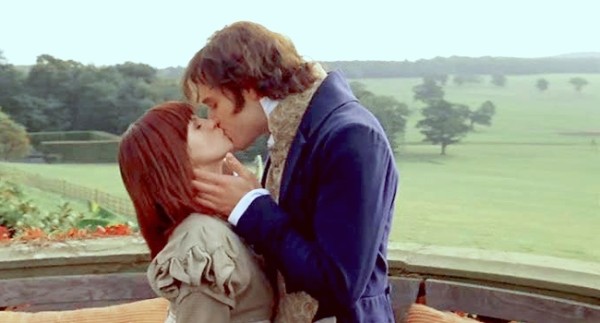
Even as Amanda’s actions and interactions disrupt and reconstruct the world of the text, she feels guilty for partaking in the fannish wish-fulfillment inherent to fan-authored works. For instance, despite their rocky start, in Lost in Austen’s most pivotal moment Darcy declares his love not for Elizabeth Bennet but for Amanda herself: her biggest “buggering-up” of the plot yet. To be the object of Mr. Darcy’s affection would generally be understood as the ultimate heteronormative Janeite fantasy, but Amanda is horrified to find it her new reality. She blames herself for damaging what she considers to be the greatest love story ever told: “I am not Elizabeth,” she cries. “The entire world will hate me!” (Ep. 3 29:23).
© 2008 ITV/Grenada Television Ltd.
Interestingly, her immediate concern is not for the integrity of the story, or even the theoretical disapproval of Austen herself—but instead for the anticipated reaction of “the entire world,” or at least her fellow fans. Like real-life Janeite writers of “wish-fulfilling” fanfiction, especially that of the self- or reader-insert variety (as well as creators of fan art, roleplaying experiences, and others), Amanda seeks not only personal satisfaction from her interactions with the text, but also connection with a larger community of fans. April De Los Reyes and Noel Pit note that among the reasons for authoring fanfiction are the readers’ desire to express their emotions, process their lived experiences, and establish a community of like-minded individuals with shared interests and social perspectives (50–51). Amanda’s near-performative initial interactions with Pride and Prejudice’s narrative, which (attempt to) affirm rather than transform, indicate a similar awareness of and loyalty to her larger fan community. These re-active, as opposed to active, responses to the text stem from Amanda’s own perception of Austen as a “divine” artist and her fellow Janeites as fundamentalist acolytes devoted to her canon.
As Amanda begins to challenge Austen’s authority, she simultaneously calls into question the limitations of her own designated status as a reader and fan. Darcy’s proposal prompts a psychological transformation regarding Amanda’s understanding of her role as an active agent positioned within Austen’s narrative: “I’m like an understudy,” she realizes. “The star has failed to turn up, and I have to go on and do the show!” (Ep. 3 31:22). Forgoing her previous efforts to preserve Austen’s story, Amanda embraces her newfound status as an active participant, or “actor,” within Pride and Prejudice’s narrative. Pinto suggests that Amanda substitutes not only for Elizabeth but for Austen herself in this moment. Even as Lost in Austen explores the modern Janeite as Austen’s faithful reader and adaptor, the series “equally depicts the desire for an absent Jane,” for “to preserve Austen,” Pinto argues, “one must play her.” That is, to maintain Austen’s popularity amidst a constantly shifting cultural landscape, Janeites must actively refresh Austen’s novels to reflect modern ideas concerning love, dating, and sexual relationships. For example, Amanda’s open sexuality in Lost in Austen portrays the modern decline of purity culture, which traditionally demands women’s chastity. The Janeite heroine’s uniquely self-aware fan identity offers a metafictional playground exploring the modernization and anachronism common within fanfiction, roleplay, gameplay, and other contemporary re-imaginings of Austen’s world, and inherent to the adaptation process.
The writers of Lost in Austen brilliantly illustrate Amanda’s role as Austen’s modern adaptor when she asks Mr. Darcy to emerge from a lake in a dripping-wet white shirt in an obvious nod to the 1995 BBC adaptation of Pride and Prejudice. When she prompts the Darcy of Austen’s storyworld to embody Firth’s portrayal of Mr. Darcy at the lake on Pemberley’s estate, Amanda initiates a fanfiction re-enactment of fanfiction, for, despite its iconic status, the sexually charged scene never appears in Austen’s text. “I am having a bit of a strange postmodern moment here,” she muses as Darcy emerges from the water (Ep. 3 29:20). Amanda’s metafictional blurring of the lines between Austen’s novel and fanfiction challenges Austen’s authorial sovereignty and becomes her first conscious act of co-authorship: she heartily accepts Mr. Darcy’s affections and agrees to marry him. Likewise, when real-life Austen fans celebrate Firth’s lake scene as an iconic part of Pride and Prejudice, they inadvertently—indeed, unconsciously—call into question Austen’s status as the singular author of their own favorite text.
© 2008 ITV/Grenada Television Ltd.
As Amanda graduates from providing “oracular” guidance to the inhabitants of Austen’s fictional world to participating as a fellow player, the lines between her role and Austen’s become increasingly blurred. As a side-effect of her “postmodern” entry into a bygone era, Amanda’s Austenian “happily ever after” comes screeching to a halt when Darcy revokes his proposal of marriage upon learning that Amanda is not a virgin. When Darcy declares that he could never marry “a woman like [her]” and dissolves their attachment (Ep. 3 38:03), Amanda commits the ultimate Janeite blasphemy: she rips her beloved copy of Pride and Prejudice to shreds, tossing the remains into a fountain at Pemberley and declaring that everything—Austen, the novel, her own fantasies of Mr. Darcy—is rubbish. The Janeite heroine here violently rejects what other Austen fans often treat as a manual of self-help. When Darcy discovers the soggy, ruined paperback on his property, he is horrified to find what appears to be a farcical account of his life and assumes that “Jane Austen” must be Amanda’s own pen name: “What jaundiced impertinence is this?” he demands. “No wonder nothing about you seems plausible. Is your name Price, or is it Austen?” (Ep. 3 43:40). The viewer’s understanding of Amanda as an active author of Lost in Austen’s Pride and Prejudice is now concrete. As Darcy equates Amanda with Austen, the parallel gives viewers permission to value Amanda’s authorial agency alongside Austen’s and canonize—at least for Lost in Austen’s purposes—Amanda’s version of events.
In realizing that the interiorities of Austen’s world extend beyond the complexities detailed explicitly in her writing, Amanda’s understanding of the novel shifts, prompting her pursuit of revision. When the Janeite heroine begins to deconstruct her understanding of Austen as a divine genius, she moves from her role as reader into an active authorial role, engaging lovingly—yet critically—with Austen’s work. In Lost in Austen’s final episode, Elizabeth’s rejection of Mr. Darcy, which paves the way for Amanda’s subsequent happy ending, is perhaps equal in significance to Amanda’s acceptance of Darcy’s affection: having encountered Austen’s Pride and Prejudice in the real world, Elizabeth immediately identifies Darcy as her fictional husband upon their eventual meeting, yet she ultimately concludes that “the necessary links that must be forged, the connections of mutual understanding—they cannot be conjured so” in the wake of Amanda’s authorial interventions in Austen’s fictional landscape (Ep. 4 25:35). In Amanda’s co-authored Pride and Prejudice, Darcy and Amanda reconcile and reaffirm their love, with Amanda choosing to remain within the fictional world of Austen’s Pride and Prejudice while Elizabeth Bennet returns to contemporary London. Jane Bennet divorces Mr. Collins, eloping with Mr. Bingley to America; in escaping the “miserable” fate of becoming Mrs. Collins, to which she was subject in Austen’s original text, Charlotte Lucas becomes a missionary in Africa. Elizabeth insists in the final episode that the magical doorway is driven by Amanda’s need, refusing her own attempts to open it, yielding only to Amanda’s authorial hand (Ep. 4 24:11). Amanda acts as a stand-in for the real-world Janeite, who immerses herself in and revises Austen’s texts, prompting her readers to interrogate their own reading practices and beliefs concerning Austen and conceptualize her texts as malleable and subject to alteration.
Understanding the reader as an active agent in accepting or rejecting, constructing or de-constructing a narrative lays the groundwork for understanding authorship more broadly as collaborative and intertextual and for recognizing texts at large as fluid or unstable entities. Lost in Austen combines canonical events, fan-canon, and original material via the Janeite protagonist, establishing a new fictional landscape for audiences to enjoy. Just as each real-life Janeite’s lived experience with the text is unique, resulting in varied understandings and interpretations of certain scenes and characters, Amanda’s presence as an unauthorized character within the novel reveals plot points previously “unknown” even to Austen herself. For instance, Amanda declares that “Jane Austen would be fairly surprised to learn she’d written” Caroline Bingley as a lesbian, and she is likewise shocked to learn that Georgiana Darcy falsely accused Mr. Wickham of seducing her after he spurned her own romantic advances (Ep. 3 41:31). These updates reflect common fan practices of writing queerness into traditionally heterosexual narratives and altering romantic relationships to increase dramatic tension that stem from fans’ desire to express their thoughts and emotions, process lived experiences, and find belonging within an established community of like-minded individuals. Rather than replacing or outshining Austen’s conception, Lost in Austen provides a co-existent timeline in which one fictional Janeite learns what it truly means to adapt Austen’s work, “stepping in as the star” to become Austen’s co-author and creating something that satisfies other needs and desires.
Ultimately, the Janeite-centric narrative endorses the authorial interventions that Janeite fan practices model. Among Janeite protagonists, Lost in Austen’s Amanda is unique in her physical ability to alter the plotline of one of Austen’s novels, but real-life Austen-fan activities are inherently immersive and revisory. Glosson writes, “Even as they reaffirm the original text and adhere to nostalgia, Austen fanfiction writers employ tactics that enable them to more completely identify with the character and insert themselves into the world of the text” (150). Many real-life Janeites—not just writers of Austen fanfiction—seek some means of entry to the worlds Austen lived in or created through fan practices such as pilgrimages to Chawton House, Regency balls, or afternoon teas featuring discussions of favorite characters. Each of us becomes Austen’s co-author when we fan-cast our favorite actors in the next Austen adaptation—when we decide unanimously that Mr. Darcy must always be played by a brunette. “You can’t just read a book!” Amanda chastises Mr. Bennet upon his apathetic response to learning that Lydia has run off with Mr. Bingley: “You must do something!” (Ep. 4 8:12). Perhaps it is not enough merely to read one of Austen’s novels; perhaps genuine engagement with the text requires some level of immersive response to the text. To continue to interact authentically, generatively, and dynamically with Austen’s fiction, perhaps real-life Janeites—like their fictional counterparts—must re-examine the ways in which they read, revise, and actively position themselves as co-authors of Austen’s work.
NOTES
The clip used in this essay satisfies the criteria for fair use established in Section 107 of the Copyright Law of the United States of America and Related Laws Contained in Title 17 of the United States Code.
1George Saintsbury coined the term Janeites in 1894 in a preface to an edition of Pride and Prejudice.
2Lost in Austen situates its protagonist within the storyworld of one of Austen’s novels; other, less well-known Janeite-centric narratives situating their protagonists within one of Austen’s fictional worlds include Laura Wade’s stage play The Watsons (2018) and the Hallmark Channel’s television film An American in Austen (2024). Alternate immersive settings in popular Janeite-centric novels include the Regency-themed Pembrook Park in Shannon Hale’s Austenland (2008) and real-world Regency England as accessed via time travel in Kathleen Flynn’s The Jane Austen Project (2017), among others.
3While many scholars have argued that Elizabeth’s ultimate attraction to Darcy is not the product of suppressed love or attraction at first sight but rather part of a long, nuanced process of self-reflection and revision (see, for instance, Elaine Bander’s “Neither Sex, Money, nor Power: Why Elizabeth Finally Says ‘Yes!’”), it is no secret that Austen fans have a reputation for drooling over the image of Colin Firth in breeches and a clingy, wet white shirt. Among others, Glosson, Yaffe, and Luetkenhaus and Weinstein note the Janeite community’s near-universal romantic appreciation of the Darcy portrayed in the 1995 BBC adaptation. Luetkenhaus and Weinstein write, “Consider Mr. Darcy (as we all should). So much of Mr. Darcy’s appeal to modern audiences revolves around his visual allure,” despite Austen’s lack of visual description within the text: “[Colin Firth’s] depiction of Mr. Darcy has become so tied to the character that fans have incorporated him into countless imaginings” (24, 25).
